Monday, 2 June 2014

Data manipulation
Hilbert and Lopez identify the exponential pace of technological change (a kind of Moore's law): machines' application-specific capacity to compute information per capita roughly doubled every 14 months between 1986 and 2007; the per capita capacity of the world's general-purpose computers doubled every 18 months during the same two decades; the global telecommunication capacity per capita doubled every 34 months; the world's storage capacity per capita required roughly 40 months to double (every 3 years); and per capita broadcast information has doubled every 12.3 years.
Massive amounts of data are stored worldwide every day, but unless it can be analysed and presented effectively it essentially resides in what have been called data tombs: "data archives that are seldom visited" To address that issue, the field of data mining – "the process of discovering interesting patterns and knowledge from large amounts of data" – emerged in the late 1980s.

Data transmission
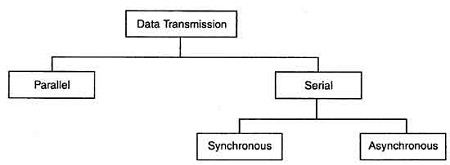
Data transmission has three aspects: transmission, propagation, and reception. It can be broadly categorized as broadcasting, in which information is transmitted unidirectionally downstream, or telecommunications, with bidirectional upstream and downstream channels.
XML has been increasingly employed as a means of data interchange since the early 2000s, particularly for machine-oriented interactions such as those involved in web-oriented protocols such as SOAP,describing "data-in-transit rather than ... data-at-rest". One of the challenges of such usage is converting data from relational databases into XML Document Object Model (DOM) structures.
Data retrieval
The relational database model introduced a programming-language independent Structured Query Language (SQL), based on relational algebr
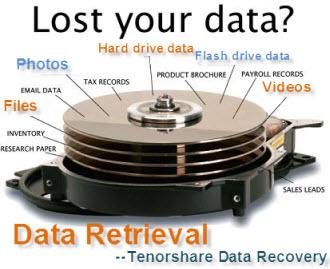
The terms "data" and "information" are not synonymous. Anything stored is data, but it only becomes information when it is organized and presented meaningfully. Most of the world's digital data is unstructured, and stored in a variety of different physical formats even within a single organization. Data warehouses began to be developed in the 1980s to integrate these disparate stores. They typically contain data extracted from various sources, including external sources such as the Internet, organised in such a way as to facilitate decision support systems (DSS).
Subscribe to:
Posts (Atom)